
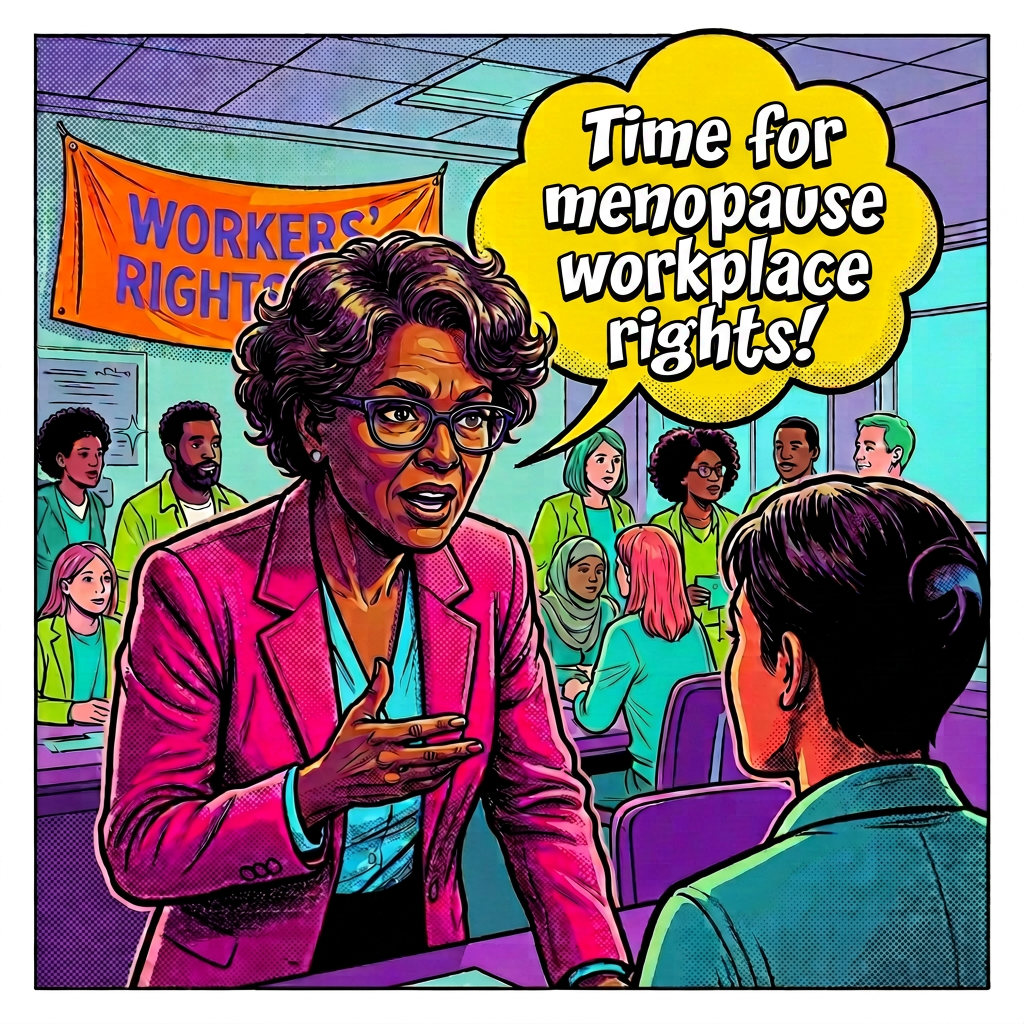
If you are a woman in your 40s or 50s, you may already know about hot flashes, trouble sleeping, or feeling foggy at work. This is often part of menopause — a normal stage of life, not a disease. But it can still make your job harder. New laws are starting to protect women going through menopause at work. This guide breaks it down in plain language.
What Is Menopause?
Menopause is the point when a woman has gone 12 months in a row without a period. Per the National Institute on Aging, most women begin perimenopause between ages 45 and 55, and the average age of menopause in the U.S. is 52. Symptoms can last two to eight years and vary widely.
The CDC reports the most common symptoms are hot flashes and night sweats, along with trouble sleeping, mood changes, and focus problems. These happen because estrogen and progesterone drop a lot during this transition. These symptoms are real, physical changes that can affect how you perform at work — not “in your head.”

Read our 4-part series on the stages of menopause.
Can Menopause Symptoms Affect Your Job?
Yes. Hot flashes during a meeting or trouble concentrating can make work harder. Many women don’t talk about it: a 2024 survey covered by WorkCare found 72% of menopausal women didn’t tell their employer about symptoms hurting their work, citing embarrassment, privacy concerns, or fear of losing their job. Knowing your rights can ease some of that fear.
What Federal Protections Exist Right Now?
There is no single federal law that names “menopause.” But you may still be protected under a few existing laws, per the U.S. Department of Labor:
- Americans with Disabilities Act (ADA): If symptoms are severe, medical evidence may get you a reasonable accommodation, like a schedule change or a fan at your desk.
- Civil Rights Act of 1964 (Title VII): Bans sex discrimination, which courts have sometimes found includes menopause-related treatment.
- Family and Medical Leave Act (FMLA): May apply when a worker has “severe symptoms” tied to menopause.
- Federal contractor rules: Federal contractors face extra rules, including Executive Order 11246 (bans sex discrimination) and Executive Order 13706 (paid sick days).
The honest truth, per Bloomberg Law: federal law doesn’t clearly name menopause as a protected condition, and courts have been mixed. That’s why states are stepping in.
Has Anyone Actually Sued Over This?
Yes. In Coleman v. Bobby Dodd Institute, reported by Forbes, a Georgia 911 dispatcher was fired after sudden bleeding tied to perimenopause. A lower court ruled the symptom wasn’t protected under Title VII; the ACLU appealed, arguing this was sex discrimination, and the employer settled. In Mesias v. Cravath, Swaine & Moore, a 2015 case reported by Carey & Associates, a supervisor said he was “tired of working with menopausal women” — but a New York federal court ruled that comment alone wasn’t enough to win the case. Forbes also reports that in 2024, the EEOC added a menopause example to its harassment guidance: a manager mocking an employee’s hot flashes and implying she’s “too old,” which it called unlawful harassment based on sex and age together.
Right now, no single high-profile menopause case is working through the courts the way Coleman’s was. Most current momentum is in state legislatures, not courtrooms — though EEOC complaints and private lawsuits do get filed regularly, usually settled quietly.
What New State and City Laws Protect Menopausal Workers?
Because federal law hasn’t caught up, states and cities are passing their own rules. Here’s what’s happening in just a few states as of 2026:
- Rhode Island: Per ArentFox Schiff, it became the first state, in 2025, to require menopause accommodations. Official bill: H 6161.
- Virginia: SB 258 bans discrimination connected to menopause symptoms in hiring and employment, per WorkCare. Official bill: Virginia LIS. A companion bill, SB 790, would require insurers to cover treatment.
- California: AB 1940 would make menopause a protected condition under the state’s Fair Employment and Housing Act.
- Illinois: Created a statewide Menopause Awareness Week; see the Illinois Lieutenant Governor’s page.
More states have similar bills pending. Laws change often, so check your state legislature’s site or Legiscan.com national legislative database for updates.
What Can You Ask Your Employer For?
Depending on your state, accommodations might include:
- A fan or access to a cooler workspace
- Flexible bathroom breaks
- Adjusted or flexible work hours
- Permission to work from home on hard days
- A uniform change (like lighter fabric)
- Extra breaks to manage symptoms
Steps to Take If You’re Struggling at Work
- Talk to your doctor and get symptoms documented in writing.
- Learn your state’s laws by searching “[your state] + menopause law.”
- Put requests in writing to HR when possible.
- Keep records of your symptoms and their impact on work.
- Contact the EEOC if you believe you’re facing discrimination.
Checklist: What to Discuss With Your Healthcare Provider
[ ] What symptoms am I having, and are they tied to perimenopause or menopause?
[ ] Are my symptoms severe enough to qualify for a workplace accommodation?
[ ] Can you document my symptoms in writing for my employer, if needed?
[ ] What treatment options are available (hormone therapy, non-hormone options, lifestyle changes)?
[ ] Are my sleep, mood, or memory affected, and what can help?
[ ] What long-term health risks should I watch for after menopause?
How to Get Involved
A few real organizations lead this advocacy work:
- Let’s Talk Menopause — a nonprofit running policy campaigns and tracking state bills.
- The Menopause Society — the leading medical nonprofit; its Making Menopause Work initiative gives employers guidance.
- Power in the Pause — run by the Black Women’s Health Imperative, tracks state bills and racial disparities in care.
- National Menopause Foundation — focused on education and advocacy for midlife women.
On the federal level, the bipartisan Advancing Menopause Care and Mid-Life Women’s Health Act — backed by six senators and actress Halle Berry — would direct $275 million toward menopause research and public awareness, per The Hill. Contact your senators to voice support for this bill or similar state-level ones.
Resources and Helpful Links
- The Marigold Woman: Menopause Post
- U.S. Department of Labor: Menstruation and Menopause at Work
- National Institute on Aging: What Is Menopause?
- CDC: Menopause, Women’s Health, and Work
- MedlinePlus (NIH): Menopause
- U.S. Equal Employment Opportunity Commission (EEOC)

Take the anonymous menopause symptom survey and see compiled results instantly.
Share your experience and tips in the comments below or at The Marigold Woman Facebook Group. Don’t forget to sign up for our newsletter to stay up-to-date with our latest post!
Disclaimer: This blog is intended for informational purposes only and should not be considered legal or medical advice, diagnosis, or treatment. We strongly encourage readers to conduct their own research and consult with a qualified healthcare professional before making any decisions or changes to their health and medical routines. Marigold Brands and The Marigold Woman cannot be held accountable for any inaccuracies or adverse outcomes related to the information presented. We strive to provide accurate and up-to-date information. However, medical knowledge is constantly evolving, and individual experiences may vary. Sources and references are provided to support the content and enable readers to further explore topics and do not imply endorsement. Always consult with your healthcare provider before making significant changes to your health routine.
This post was researched and drafted with the assistance of AI. All sources were reviewed and verified to the best of their ability by the editorial team.




Leave a Reply