
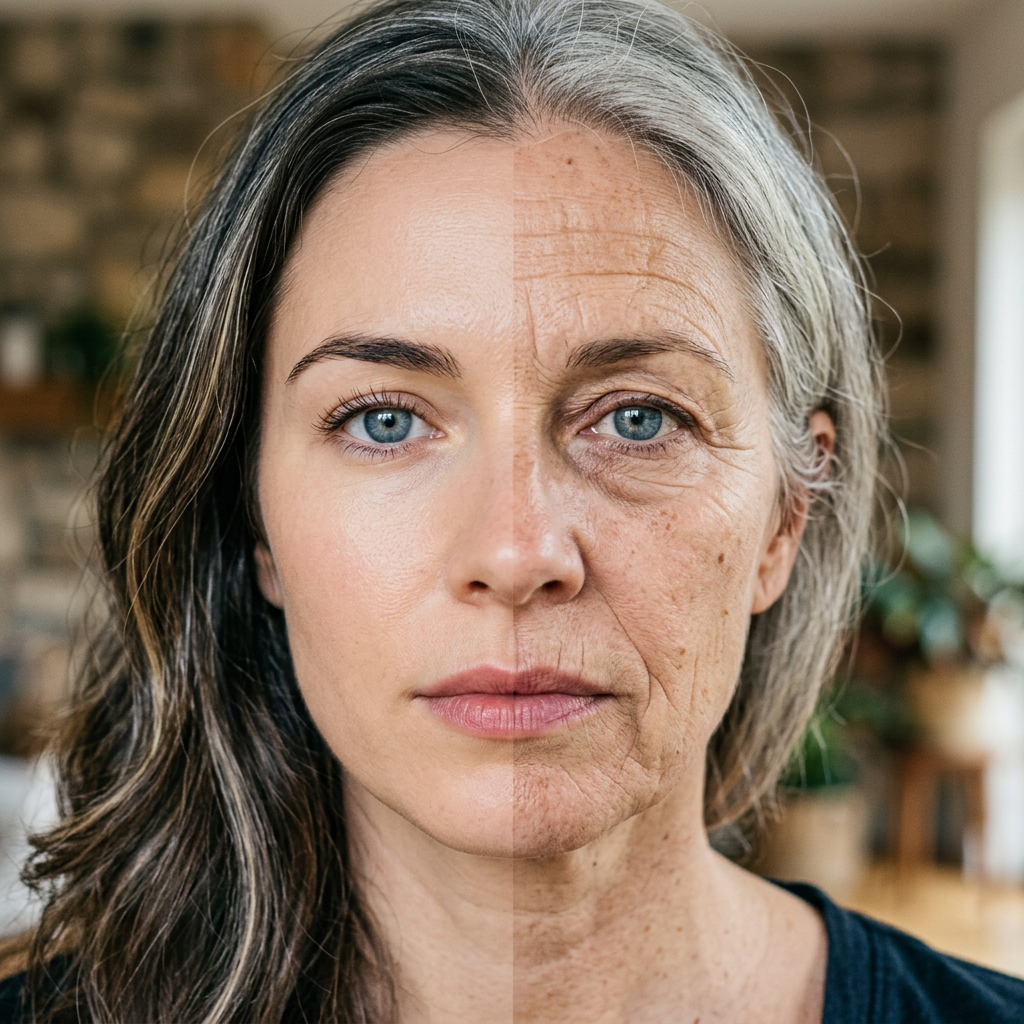
If you’re in perimenopause or menopause, you may have noticed your skin changing. It might feel drier, thinner, or less bouncy than it used to. You may have also heard that hormone replacement therapy (HRT) — sometimes called menopausal hormone therapy (MHT) — can help with this. But does HRT really make you look younger? Let’s look at what the science says, in plain language.
Why Skin Changes During Menopause
During menopause, your body makes much less estrogen. Estrogen isn’t just involved in your monthly cycle — it also helps your skin make collagen (the protein that keeps skin firm), elastin (which keeps skin springy), and hyaluronic acid (which holds water in your skin to keep it plump). This is why so many women notice skin changes around the same time as other menopause symptoms.
Research shows that skin collagen drops sharply in the first few years after menopause, and this decline is closely tied to lower estrogen levels (PubMed / Br J Obstet Gynaecol). A review in a dermatology journal reports that after menopause, women often notice their skin getting drier first, followed by looser, less firm skin (ScienceDirect pilot study).
So, Does HRT Actually Help Skin Look Younger?
The short answer: the research suggests it can help, especially with skin thickness, firmness, and collagen — but it isn’t a magic reset button.
The strongest evidence comes from a 2023 meta-analysis (a study that combines results from many smaller studies) that reviewed 15 studies and nearly 1,600 women. It found that women using HRT had measurably better skin elasticity, more collagen, and thicker skin compared to women who weren’t using it (Journal of Menopausal Medicine meta-analysis).
Older studies point the same direction. One study of skin biopsies found that collagen loss after menopause could be prevented with hormone therapy (PubMed). Another found that women on transdermal estrogen (patches or gels) saw the biggest boost in skin collagen compared to other forms of HRT (Short Review, GREM Journal).
A more recent 2025 literature review looked at decades of research (going back to 1971) and concluded that HRT can partially restore collagen, elasticity, and hydration lost during menopause — and that these skin changes matter for how women feel about themselves, not just how they look (Journal of Cosmetic Dermatology summary).
What HRT Can’t Do
It’s important to keep expectations realistic:
- HRT doesn’t erase wrinkles you already have. It may slow further collagen loss and improve skin thickness and moisture, but it isn’t a substitute for retinoids, sunscreen, or other proven skin treatments.
- Results vary by study and by woman. Some earlier research found no effect on collagen at all, and experts note many studies are small (short review, GREM Journal).
- The form of HRT matters. Several studies suggest transdermal estrogen (patches or gels absorbed through the skin) may raise skin collagen more than oral pills do. One review of skin biopsy studies found that transdermal estrogen produced the largest systemic increase in collagen compared with other delivery methods (ScienceDirect review). A separate review of hormone therapy and skin aging reported the same pattern — women on transdermal estrogen showed the greatest collagen gains compared with other HRT groups (Short Review, GREM Journal). One possible reason is that oral estrogen is processed by the liver before it reaches the rest of the body, while transdermal estrogen goes directly into the bloodstream — but researchers note results aren’t fully consistent across studies, and more high-quality research is still needed.
The Bigger Picture: HRT Isn’t Just About Looks
HRT is a medical treatment, and skin appearance is a side benefit — not the main reason doctors prescribe it. HRT is primarily used to treat menopause symptoms like hot flashes, night sweats, and vaginal dryness, and it can also help protect bone density (Cleveland Clinic).
For years, many women avoided HRT because of a large 2002 study called the Women’s Health Initiative (WHI), which linked hormone therapy to higher risks of breast cancer, stroke, and heart attack. Since then, follow-up research has clarified those findings: much of the original WHI group was older and further past menopause than the women who typically start HRT today. Current guidance from the North American Menopause Society states that for healthy women under 60, or within 10 years of their last period, the benefits of hormone therapy generally outweigh the risks (Mayo Clinic News Network).
Risk still depends on the type of hormone, the dose, how it’s taken (pill vs. patch), and your personal health history, including any history of cancer, blood clots, or heart disease (Mayo Clinic).
The Bottom Line
Research supports the idea that HRT can help preserve skin collagen, thickness, and elasticity during menopause, which may translate to skin that looks and feels more youthful. But HRT is a personal medical decision that should be based on your full health picture — not appearance alone.
Checklist: What to Discuss With Your Healthcare Provider
Bring this list to your next appointment:
[ ] My current menopause symptoms (hot flashes, sleep, mood, vaginal dryness, skin changes)
[ ] How long ago was my last period, and my age
[ ] My personal and family history of breast cancer, blood clots, stroke, or heart disease
[ ] Which type of HRT might fit me (pill, patch, gel, cream) and why
[ ] Estrogen-only vs. estrogen-plus-progestogen — which applies to me and why
[ ] Realistic expectations: what HRT can and can’t do for my skin
[ ] How often I’ll need follow-up visits, mammograms, and other screenings
[ ] Non-hormonal options if HRT isn’t right for me
[ ] Lowest effective dose and how long I might stay on treatment
Resources
- Mayo Clinic: Hormone Therapy — Is It Right for You?
- Cleveland Clinic: Hormone Replacement Therapy (HRT) for Menopause
- MedlinePlus (NIH): Hormone Therapy for Menopause
- National Institute on Aging: Research on Menopause and Women’s Health
- NIH DiscoverWHR: Menopause Research Overview
Share your experience and tips in the comments below or at The Marigold Woman Facebook Group. Don’t forget to sign up for our newsletter to stay up-to-date with our latest post!

Take the anonymous menopause symptom survey and see compiled results instantly.
Disclaimer: This blog is intended for informational purposes only and should not be considered legal or medical advice, diagnosis, or treatment. We strongly encourage readers to conduct their own research and consult with a qualified healthcare professional before making any decisions or changes to their health and medical routines. Marigold Brands and The Marigold Woman cannot be held accountable for any inaccuracies or adverse outcomes related to the information presented. We strive to provide accurate and up-to-date information. However, medical knowledge is constantly evolving, and individual experiences may vary. Sources and references are provided to support the content and enable readers to further explore topics and do not imply endorsement. Always consult with your healthcare provider before making significant changes to your health routine.
This post was researched and drafted with the assistance of AI. All sources were reviewed and verified to the best of their ability by the editorial team.




Leave a Reply