
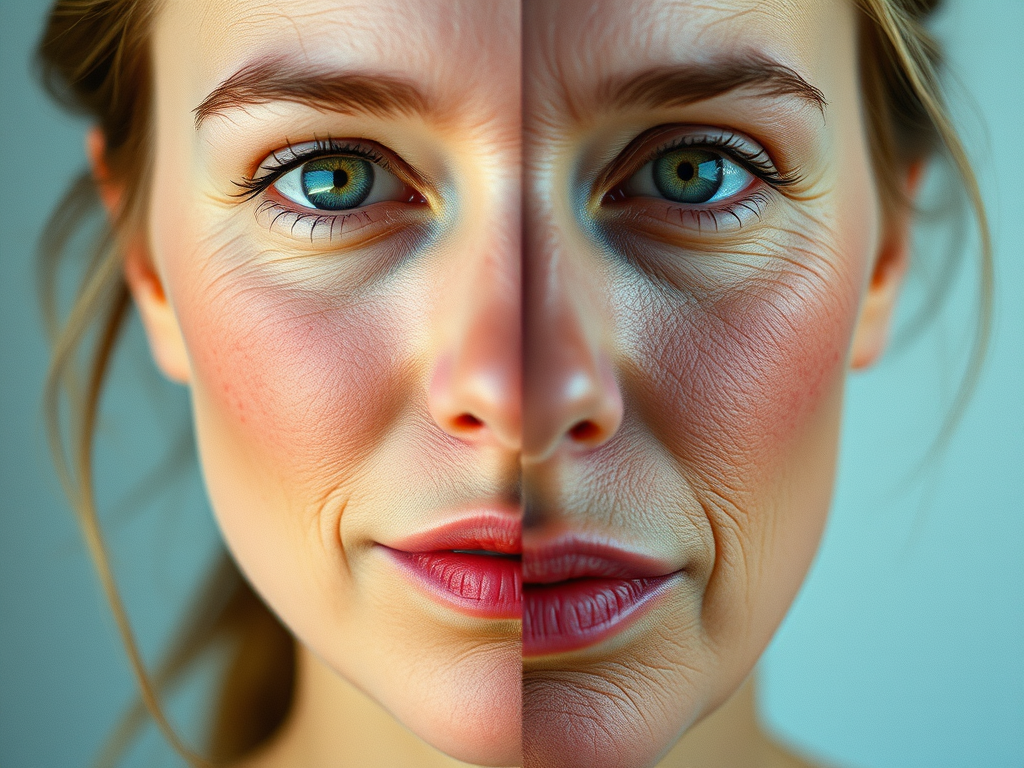
Understanding How Menopause Transforms Your Skin
Menopause represents a significant transition in a woman’s life, typically occurring between ages 45 and 55. While hot flashes and mood changes often dominate the conversation, the impact on your skin, particularly menopausal skin, deserves equal attention. As estrogen levels decline, your skin undergoes remarkable changes that require adjustments to your skincare routine.
According to The National Institute of Health (NIH), collagen, a key building block of healthy skin, is thought to decrease by as much as 30% in the first five years after menopause. These changes aren’t simply cosmetic concerns—they reflect fundamental shifts in your skin’s structure and function.
Menopausal Skin Challenges: Key Skin Changes During and After Menopause
1. Dryness and Loss of Hydration
The most immediate change many women notice is increased dryness. Research published in an NIH research article shows that estrogen plays a crucial role in maintaining skin hydration by supporting natural hyaluronic acid production. As estrogen decreases, your skin produces less oil, leading to:
- Flakiness and rough texture
- Increased sensitivity
- Tightness and discomfort
- Exaggerated appearance of fine lines
What to watch for: If your previously effective moisturizer suddenly seems inadequate or your skin feels perpetually tight even after moisturizing, these are clear signs of menopause-related dryness.
2. Loss of Elasticity and Collagen
Perhaps the most significant change involves collagen—the structural protein that keeps skin firm and resilient. Studies published in ScieneDirect indicate that women lose approximately 30% of their skin’s collagen within the first five years of menopause, with a continued decline of about 2.1% annually thereafter.
According to NIH, decreased estrogen leads to:
- Reduced skin thickness (by up to 1.13% annually)
- More pronounced wrinkles and fine lines
- Sagging, particularly around the jawline and neck
- Slower wound healing
What to watch for: Sudden appearance of creasing in areas that were previously smooth, or a noticeable drop in facial contours, especially along the jawline.
3. Changes in Skin Tone and Texture
Hormonal fluctuations often manifest as changes in pigmentation and texture:
- Increased appearance of age spots and hyperpigmentation
- Uneven skin tone and blotchiness
- Enlarged pores
- Rougher skin texture
These changes result from slowed cell turnover and disrupted melanin production during menopause.
What to watch for: New dark spots or patches, especially on the face, neck, and décolletage areas that receive sun exposure.
4. Increased Sensitivity and Reactivity
Many women are surprised to develop sensitive skin during menopause, even if they’ve never experienced it before. This heightened sensitivity can manifest as:
- Redness and flushing
- Stinging sensations with products previously well-tolerated
- Development of rosacea or exacerbation of existing conditions
- Increased tendency toward irritation
What to watch for: Sudden reactions to favorite products or environmental factors that never bothered you before.
5. Adult Acne and Breakouts
The hormonal imbalance during menopause can trigger unexpected breakouts, particularly along the chin, jawline, and neck. These breakouts differ from adolescent acne, typically presenting as:
- Deeper, cystic blemishes
- Slower-to-heal inflammations
- Combination with dryness (rather than oiliness)
- Greater potential for post-inflammatory hyperpigmentation
According to NIH, just over 25% of women in their 40s and 15% in their 50s experience hormonal acne.
What to watch for: New breakout patterns, particularly along the lower face, combined with other signs of dryness.
Essential Skincare Strategies to Address Menopausal Skin Challenges
1. Prioritize Hydration Inside and Out
Addressing dryness requires a multi-faceted approach:
- Upgrade your moisturizer: Look for products containing ceramides, hyaluronic acid, and glycerin that help restore the skin barrier. NIH confirms these ingredients effectively combat menopausal dryness.
- Consider facial oils: Nourishing oils like squalane, jojoba, and rosehip can supplement your skin’s diminished natural oils without triggering breakouts.
- Hydrate internally: Increasing water consumption significantly improves skin hydration in menopausal women.
2. Incorporate Collagen-Supporting Ingredients
To combat elasticity loss:
- Retinoids: Dermatologist-recommended retinol or prescription retinoids increase collagen production and cell turnover. Start with a lower concentration (0.25-0.5%) and gradually increase frequency to minimize irritation.
- Peptides: These amino acid chains signal your skin to produce more collagen. Look for products containing Matrixyl, Argireline, or collagen peptides.
- Vitamin C: This powerful antioxidant not only brightens skin but also plays a crucial role in collagen synthesis. Vitamin C is known to be effective in improving skin elasticity in post-menopausal women.
3. Address Pigmentation and Texture
For more even tone and texture:
- Exfoliate strategically: Incorporate gentle chemical exfoliants (AHAs, BHAs, PHAs) to remove dead skin cells and accelerate cell turnover without irritation. Avoid harsh physical scrubs.
- Add brightening ingredients: Niacinamide, licorice root extract, and vitamin C help fade dark spots and even skin tone without causing irritation.
4. Protect Against Further Damage
Prevention becomes even more crucial during menopause:
- Upgrade your sun protection: Use broad-spectrum SPF 30-50 daily, regardless of weather or season. UV exposure accounts for visible aging signs, which intensify during menopause.
- Consider antioxidants: Products containing vitamin E, resveratrol, green tea extract, and niacinamide help neutralize free radicals that accelerate aging.
- Minimize environmental exposure: Pollution particles can penetrate thin menopausal skin more easily. Consider products with anti-pollution technology or ingredients like niacinamide that strengthen the skin barrier.
5. Adapt Your Skincare Routine
Menopause requires rethinking your entire regimen:
- Simplify cleansing: Switch to cream or oil-based cleansers that don’t strip natural oils. Foaming cleansers can potentially exacerbate dryness.
- Layer products strategically: Apply products from thinnest to thickest consistency, allowing each to absorb before applying the next.
- Consider facial massage: Gentle massage techniques during product application can stimulate circulation and lymphatic drainage, temporarily improving skin tone and reducing puffiness.
Beyond Skincare: Lifestyle Factors That Contrribute to Menopausal Skin Challenges
Stress Management
Chronic stress elevates cortisol levels, which further depletes collagen and accelerates aging. Stress management techniques like meditation and yoga can improve skin health during menopause.
Sleep Quality
During sleep, your skin engages in crucial repair processes. Menopause often disrupts sleep patterns, creating a challenging cycle. Establishing a consistent sleep routine and creating a cool, dark sleeping environment can help maximize skin renewal.
ScienceDirect mentioned that to improved skin health during menopause women should include the following in their diet:
- Phytoestrogen-rich foods (flaxseeds, soybeans)
- Omega-3 fatty acid sources (fatty fish, walnuts, chia seeds)
- Antioxidant-rich fruits and vegetables (berries, leafy greens)
- Collagen-supporting foods (bone broth, protein-rich foods)
Hormone Replacement Therapy Considerations
For some women, hormone replacement therapy (HRT) may improve skin hydration and elasticity. ISGE GREM Journal publication found that HRT users showed 48% greater skin elasticity than non-users after one year.
However, HRT decisions should prioritize overall health considerations rather than cosmetic benefits. Always consult with your healthcare provider about whether HRT is appropriate for you.
Quick Reference: Signs Your Skincare Routine Needs Updating
- Persistent dryness despite regular moisturizing
- New sensitivity to previously well-tolerated products
- Pronounced overnight creases that don’t disappear by midday
- Makeup that settles into lines more noticeably
- Increased redness or flushing
- Adult acne concentrated around the jawline and chin
- Sudden appearance of age spots or hyperpigmentation
- Texture changes including roughness or enlarged pores
Tips for Selecting Menopausal Skincare Products
- Look beyond “anti-aging” marketing: Focus on ingredients and formulations rather than promises.
- Perform patch tests: With increased sensitivity, test new products on your inner arm for 24-48 hours before applying to your face.
- Invest strategically: Prioritize treatments (serums, targeted treatments) over cleansers that remain on skin briefly.
- Consult professionals: Consider seeing a dermatologist for personalized recommendations, especially if experiencing dramatic changes.
- Be patient: Allow 6-12 weeks to see results from new skincare regimens.
Key Takeaways
Menopause brings significant changes to your skin, but with understanding and adaptation, you can maintain healthy, radiant skin through this transition. Remember that these changes are natural and universal—you’re not alone in experiencing them.
By incorporating hydrating ingredients, collagen-supporting treatments, and consistent sun protection into your routine, you can address the major concerns of menopausal skin while embracing this new chapter of life with confidence and grace.
Further Reading
- Thornton, M.J. (2022). “Estrogens and aging skin.” Dermatologic Endocrinology, 5(2), e1175003. https://www.ncbi.nlm.nih.gov/pmc/articles/PMC3772914/
- American Academy of Dermatology. (2024). “Adult acne: Why it occurs and how to treat it.” https://www.aad.org/public/diseases/acne/really-acne/adult-acne
- Calleja-Agius, J., & Brincat, M. (2022). “The effect of menopause on the skin and other connective tissues.” Gynecological Endocrinology, 28(4), 273-277. https://www.tandfonline.com/doi/abs/10.3109/09513590.2011.613970
- Skin Cancer Foundation. (2023). “Sun Protection and Mature Skin.” https://www.skincancer.org/blog/photoaging-what-you-need-to-know/
This post was researched and drafted with the assistance of AI. All sources were reviewed and verified to the best of their ability by the editorial team.
Disclaimer: This blog is intended for informational purposes only and should not be considered legal or medical advice, diagnosis, or treatment. We strongly encourage readers to conduct their own research and consult with a qualified healthcare professional before making any decisions or changes to their health and medical routines. Marigold Brands and The Marigold Woman cannot be held accountable for any inaccuracies or adverse outcomes related to the information presented. We strive to provide accurate and up-to-date information. However, medical knowledge is constantly evolving, and individual experiences may vary. Sources and references are provided to support the content and enable readers to further explore topics and do not imply endorsement. Always consult with your healthcare provider before making significant changes to your health routine.
Share your experience and tips in the comments below or at The Marigold Woman Facebook Group. Don’t forget to sign up for our newsletter to stay up-to-date with our latest post!




Leave a Reply